Blog
Healthcare Waiting Room Furniture: A Complete Guide to Comfort, Hygiene and Design

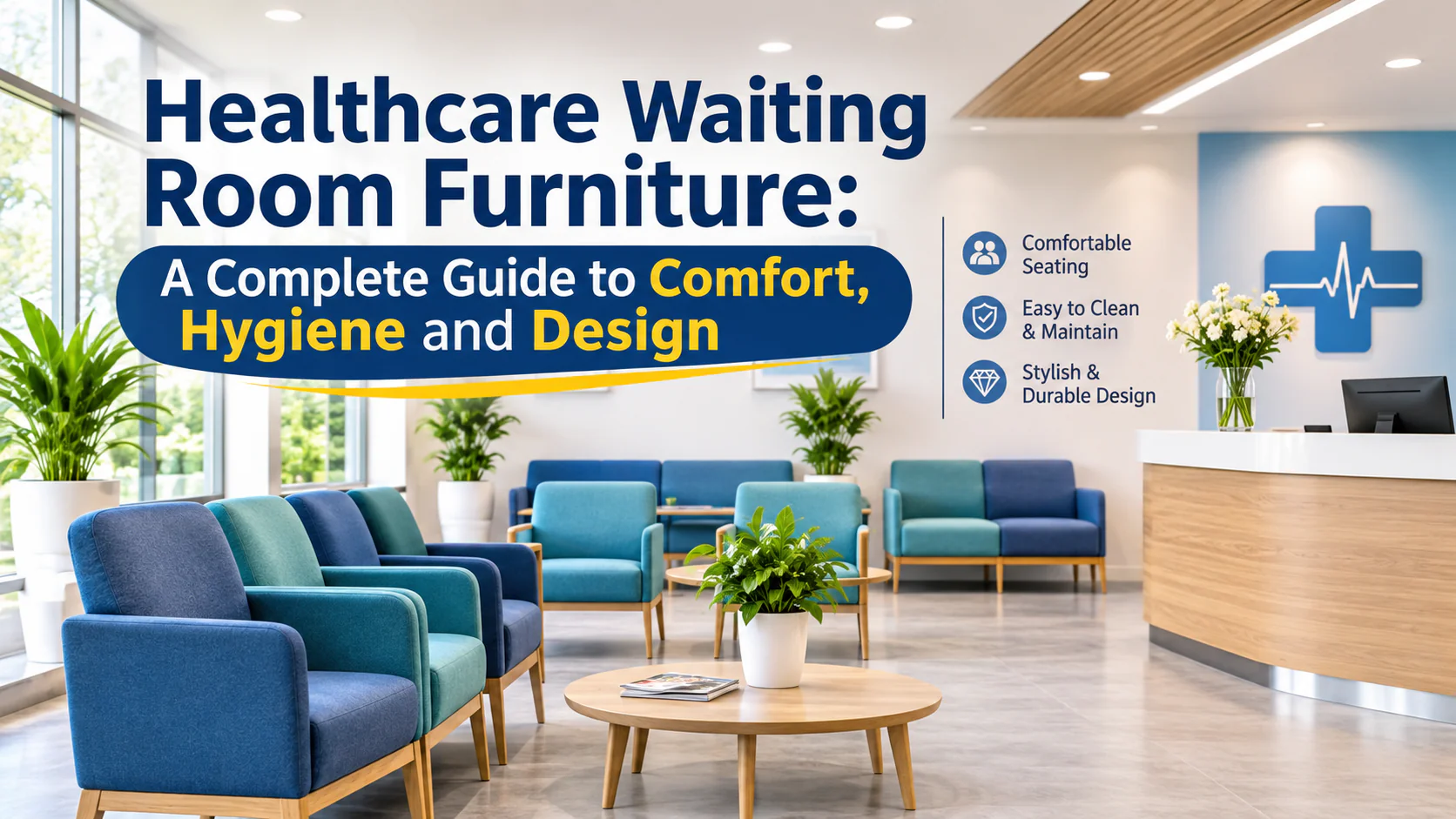
The right kind of waiting room furniture can create a good first impression and set a relaxing mood for patients and visitors. Waiting rooms in a healthcare facility can be a lot more challenging than a normal office waiting area. It has to be accessible to people with various mobility requirements. Seating has to be comfortable enough to accommodate long wait times and provide support. It has to be easy to clean and maintain.
At Contract Furniture Specialists, we have the experience and understanding to accommodate the specific needs for healthcare facilities. We look to provide the best furniture solution by combining function and style.
In this guide, we break down the important considerations when investing in the right furniture for your healthcare waiting and reception area.
1. Understanding the Needs of Patients and Visitors
Knowing who will be using the waiting area helps in deciding the type of furniture that will best meet the needs of the users.
A healthcare waiting area can have patients, family members and friends, visitors, carers and staff. They all may have different levels of need and expectation. Furniture has to be comfortable and accessible enough to meet the needs of each user.
Important considerations include:
- Seat height and depth
- Back support
- Armrests
- Spacing between seats
- Clear access around furniture
- Upholstery and finishes
The goal is to create a functional seating arrangement that is not overly clinical or institutional.
2. Prioritize Hygiene and Easy Maintenance
Cleanliness is essential in all areas of a healthcare facility, including waiting areas. Furnishings in waiting areas are frequently touched by numerous people and require the selection of appropriate materials.
Easy-to-clean and easy-to-maintain surfaces and finishes should be considered when choosing upholstery and furniture.
Depending on the facility’s needs, suitable options may include:
- Easy-to-clean upholstery
- Durable, commercial-grade, easy-to-clean fabrics
- Hard-to-wear, non-porous surfaces
- Hard-to-wear furniture components
- Materials that allow for easy cleaning with the facility’s cleaning products
Furniture should not be selected based on looks only. It should be functional for the conditions in which it will be used.
3. Select Durable Commercial Furniture
Furnishings for healthcare waiting areas are frequently used and require durability for all components, including the frames.
Commercial furniture should be designed to be used repeatedly and to maintain its appearance.
Consider the quality of:
- Frame and supporting structure components
- Type, weight and thickness of upholstery and fabric components
- Type and thickness of cushioning
- Type of joints and connections
- Edges and surfaces
- General workmanship and construction
No health care facility can operate without furniture. One way to boost efficiency is to invest in quality furniture. This reduces the cost of frequent repairs and replacement.
At Contract Furniture Specialists, our focus on craftsmanship, precision and functionality reflects the importance we give to furniture solutions for demanding commercial environments.
We believe that waiting for an appointment can be stressful and that seating can help alleviate some of the stress. Comfortable seating can also make the waiting area an inviting place.
When selecting waiting room chairs, consider:
- Seat height
- Back and armrest support
- Cushioning
- Chair shape
For longer wait times, bigger groups of visitors and an informal reception area, connected seating can be used. A more relaxed informal seating area can be created by using sofas and reception seating. Flexible seating can be created using individual chairs. Fixed seating can be created using banquette seating. The most effective use of wall space can be created by using banquette seating. The most appropriate solution also depends on the expected use and available space.
Furniture should be arranged in a way that aids free movement within the facility. This includes:
- Creating a clear pathway to the reception desk
- Adequate circulation space
- A clear pathway for the staff to operate effectively
- Entrances and exits to the facility
Seating should also take into account adequate space for movement for persons using mobility aids.
1. Right Balance of Flexibility
Fixed seating is unsuitable for areas where many visitors are expected. In these scenarios, flexible seating is best. Flexible seating can be arranged for use in a number of different ways.
2. Ensure Effective Use of Space
Not all healthcare facilities have large waiting areas. Smaller facilities may need to accommodate a number of visitors in a small space.
Effective use of space can be achieved using a combination of fixed seating and free standing chairs.
Banquet seating can also be used to good effect in rooms where standard furniture is unsuitable.
Before choosing furniture, it is important to take into account:
- The size of the room
- The number of seats required
- The position of doors and access points
- The location of the reception desk
- Permanent features of the room
- The space available for people to move about
A good furniture layout can achieve the right balance of capacity and functionality.
3. Use The Full Range Of Furniture Options
The layout of furniture can affect the atmosphere of a space, and therefore the experience people have of that space.
Arrangement and style of furniture, combined with the color and material palette, can be used to great effect to create different moods and emotional responses in a space.
Use the furniture to:
- Compliment the wall and floor finishes of the room
- Accentuate the colors used in the lighting and the reception desk
- Be in harmony with the existing interior fittings
The aim should be to achieve a comfortable, professionally designed and welcoming space for people attending the healthcare facility.
8. Select Practical Furniture for Reception Areas
Furniture in healthcare reception areas differs from that used in patient waiting areas. Various types of furniture, from reception desks to staff seating and visitor chairs, are used in different ways and for different functions.
Reception desks and furniture should be arranged to facilitate the workflow of staff. Visitor seating should be comfortable but located in such a way that it does not obstruct access to the reception desk.
The same principles should also be applied to furniture used in consultation rooms.
Planning the various types of furniture needed for different areas of the same facility can create an internal consistency in the design whilst still achieving the function required for each area.
9. Consider Bespoke Healthcare Seating
It can be beneficial to use a contract furniture supplier for the same reasons it can be beneficial to use a commercial furniture supplier in the various healthcare environments.
Bespoke seating, however, can be designed to incorporate architectural features of a particular space. It can also be designed to facilitate the operational requirements of a particular space.
Bespoke banquette seating can also be designed to use an otherwise under-utilized area of a space. It can also be designed to meet specific seating requirements, wall lengths and dimensions of a space.
Working in conjunction with a contract furniture supplier can help realize the seating requirements for a particular project.
10. Plan Manufacturing, Delivery and Installation
A project’s success is not only in the choice of attractive chairs, but the overall process of selecting, designing, manufacturing, delivering and installing furniture.
Precise measurements are important in custom furniture-making. The design needs to be reviewed against available space.
The project team needs to think about delivery access and installation, as well as any operational restrictions.
A collaborative approach can reduce disruptions and help ensure the completed furniture functions as intended.
Why Contract Furniture Specialists?
When it comes to upholstered seating for a healthcare environment, there are a number of elements to consider including design, function, durability, and comfort.
Contract Furniture Specialists is a UK-based company that specializes in bespoke seating, banquette seating, and other forms of commercial contract furniture.
We provide a one-stop service for clients, designers and project managers and can create furniture solutions that are visually appealing and functional.
Our approach consists of:
- Identifying the requirements of each space
- Creating seating solutions based on project requirements
- Utilizing design and combining practical functionality
- Using the best construction and materials
- Delivering exact solutions
If you are considering new seating, fixed seating, or a complete bespoke commercial furniture solution, talk to us about your requirements.
To learn more about our approach and the services we offer, visit our website.
Final Thoughts
When selecting furniture for a healthcare waiting room, a number of critical factors must be considered.
Standard seating is not always a good fit for every facility. Custom furniture is often a better solution for balancing specific dimensions, layouts and design elements. Healthcare organizations can plan projects carefully to choose the right furniture to design waiting areas to meet the needs of patients, visitors and staff.
Frequently Asked Questions
A waiting room can have individual chairs, connected seating, sofas, and modular furniture, as well as customized banquette seating. The best option for a waiting room depends on the dimensions of the room and the type of visitors expected.
The upholstery should be durable, and appropriate for the facility’s cleaning and maintenance requirements. The material should be considered based on the type of use, how it will be cleaned and the environment in which it will be placed.
Yes. Seating can be designed according to the measurements of a room, including wall lengths and corners, seating capacities, and the types of finishes in a room. Custom solutions are beneficial when standard furniture does not work with the dimensions of the space.
Waiting areas in the healthcare industry experience frequent and often prolonged use. Commercial-grade furniture is built to endure use and to last, and can be of enhanced quality. Additionally, concerns for maintenance also play a role.
By understanding the constraints of a room, including layout, seating capacities and clear access routes, fixed and freestanding seating, along with other solutions, can help better utilize a space.
If fixed seating is not an issue, banquette seating can be used in efficient ways to utilize space. Various factors such as accessibility and cleaning also need to be considered along with the overall comfort of users.