Blog
How to Choose the Right Upholstery for Commercial Seating

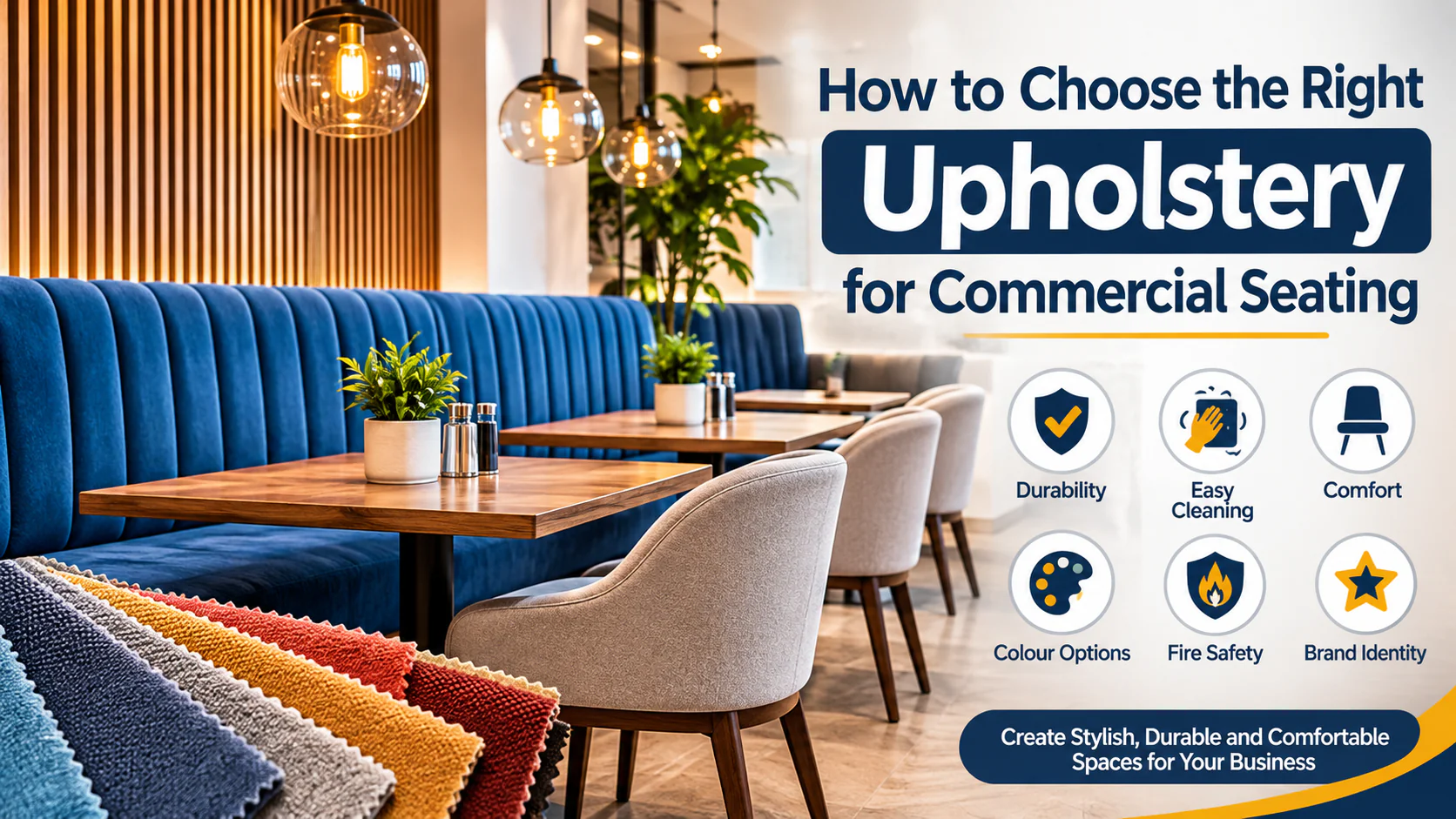
When designing commercial seating, various elements of upholstery such as fabric and texture, in addition to the finish, can impact the appearance and feel of the furniture, and whether it is appropriate for a particular use.
When furnishing hotels, restaurants, or other commercial enterprises, the material used must endure the test of time, in terms of use, cleaning and spills. Appearance is not the only consideration.
If you’re refurbishing a restaurant, or buying furniture for a hotel or commissioning a bespoke item like a banquette, you need to choose upholstery that is in keeping with your decor, yet allows for the practical demands of your business.
Contract Furniture Specialists understand the needs of the commercial industry. Here is what you should consider when choosing upholstery for commercial seating.
1. Identify the Commercial Environment
You must first identify the nature of the commercial environment you are seeking to furnish, in order to decide on an appropriate upholstery.
There are differences between each environment, and what you use for a hotel lounge may differ from what you use for a restaurant or office reception area. Seating that will be used extensively, and perhaps repeatedly, abused by customers may require a different upholstery than a hotel lounge.
When selecting upholstery, consider factors including:
- The frequency of footfall by staff and customers
- The frequency of use
- The type of people using the furniture
- Cleaning and maintenance schedules
- The likelihood of spills and marks
- How long people might remain seated
- The interior design, including the brand identity
Understanding these factors helps to identify finishes and materials suitable for a specific purpose.
2. Prioritise Durability for Commercial Settings
Restaurant chairs, upholstered benches in hotels and reception sofas may all be repeatedly used by different people throughout the day.
A fabric or material that may work well for seating in a private home may not be appropriate for a commercial or hospitality setting.
When assessing options, find out how well the fabric or material would perform for the anticipated level of use. Other factors to consider may include fabric specifications and abrasion resistance, and if available, the manufacturer’s recommendations.
Durability is important; however, the overall quality of the seating should also be good, including the frame, cushioning, and upholstery.
3. Think About Cleaning and Maintenance
Furniture in restaurants, cafes and hotels has to withstand cleaning as part of their routine maintenance. So does furniture in reception areas and waiting rooms.
When selecting upholstery, consider the level of maintenance and cleaning that the furniture will require. Consider the expected contacts, the duration of contact, and type of contact. Will the furniture be marred by normal use?
Consider the following points before choosing fabric or finish:
- Are the manufacturer’s recommended cleaning instructions available?
- Is the material suitable for the environment it is intended for?
- How should common spills and marks on the material be treated?
- Are special cleaning agents or detergents required?
- Are there any recommendations for maintenance or care?
Do not assume that materials with easy clean or stain-resistant finishes are acceptable for all commercial situations. Manufacturer’s recommendations should always be consulted.
It is possible to select upholstery which has appropriate care and cleaning requirements for the environment in which it is to be placed.
4. Select Colours That Complement Your Interior
Upholstery colour has a major influence on the impression created by commercial furnishings.
Well thought out colour choices can make the difference between a warm and welcoming restaurant and a cold and unpleasant one.
When designing a furnished commercial space consider the following:
- Existing colour schemes and schemes incorporated into the furnishings
- The brand’s identity and visual guidelines
- The appearance of the furnishings
- The expectations of cleaning and maintenance
- Natural and artificial lighting
- The size and shape of the space
The aim is to find a finish that enhances the interior and is in keeping with brand identity, rather than choosing a colour that’s purely cosmetic.
5. Select Colours to Support Your Brand Identity
Well thought out choices in commercial furnishings and coverings can enhance brand identity and the impression of a business.
Dining environments use distinctive colors and textures to create a signature style. In contrast, hotels and other residential environments may prefer more harmonious finishes. Offices, which tend to favor a more refined and professional image, may choose more subtle upholstery finishes.
Contract furniture, however, can often be manufactured to incorporate the kind of customization that integrates seating solutions to better coordinate with the interior design scheme.
Upholstery may feature:
- Complimentary colors
- Contrasting seat and back finishes
- Decorative patterns
- Edging and detailing
- Furniture finishes
- Different styles of upholstery across seating areas
These details can be used to ensure commercial interiors are integrated and well thought out.
6. Do Not Overlook Comfort
While appearance and durability are important considerations for furniture, comfort should be considered as part of the specification.
The components of a seat significantly impact how comfortable it feels. Important considerations include the density of the foam and the thickness of the cushioning, as well as the depth of the seat and backrest.
Customers of a restaurant or hotel may remain seated for long periods. Waiting area and reception furniture in offices or health care facilities may also see considerable use.
The design should be integrated and offer the necessary comfort and support for its intended purpose.
A well-designed seating solution should enable the end user to attain comfort for the length of time they may be expected to use the seating.
7. Check Fire Performance
Depending on the building and specification of the project, it is possible that commercial furniture may need to be fire tested and meet fire performance standards.
Businesses should speak to their furniture suppliers about these requirements before finalizing their upholstery selection. Fabric and foam suitability should be confirmed against project specifications and associated standards and regulations.
Requirements vary according to the type of premises and their intended use. It is therefore essential not to assume a material which is suitable for one project will automatically be suitable for another project.
A contract furniture specialist can assist the specifier in integrating the appropriate upholstery as part of a complete furniture solution.
8. Evaluate the Complete Furniture Construction
Upholstery should never be appraised in isolation from the rest of the furniture. The support frame, cushioning, joinery, dimensions and upholstery all play an equally important role in defining the final product.
When considering a proposal for commercial seating, the reviewing party should evaluate:
- The frame construction and materials
- Cushioning and support
- Fabric specifications
- Intended use
- Cleaning and maintenance requirements
- Available finishes and customization
- Repair, replacement and disposal considerations
A complete and integrative approach benefits the specifier to make informed decisions for their contract furniture investment.
9. Carefully Choose Upholstery for Banquette Seating
Banquette seating is frequently used for seating in the hospitality, cafes and restaurant trades. Given that banquette seating covers a lot of wall space, the upholstery selection does impact the overall interior design scheme.
Because the dimensions, layout and style of a commercial interior often drive design of the banquette seating, it can be completely customized to a particular job.
Different upholstery options are available, including:
- Bold colors
- Textured fabrics
- Contrasting seat and back
- Piping and detaling
- Curved or straight banquettes
- Dining chair and table combinations
A strategically thought out combination can create a distinctive seating area and effectively use space.
For restaurants and other hospitality businesses wishing to give their interiors a more personalized look, explore our contract furniture to find out more about our bespoke seating and furniture options.
Consider Bespoke Upholstery for Your Commercial Project
Not all standard furniture meets the design and usability requirements for a particular commercial space.
Bespoke seating can provide greater control and flexibility when making design choices and practical usability requirements for furniture. This can be invaluable in cases where there are unusual layout requirements and spaces, particularly where there are specific branding requirements and needs for furnishing multiple spaces.
A restaurant, for example, may want a bespoke banquette to match a particular design element.
A hotel may require seating for their lounge, reception and dining areas to be of the same design.
An office may require corporate furnishing for its reception area.
A café may require seating to maximize space and be designed around its layout.
At Contract Furniture Specialists, we seek to understand the space you want to furnish, and through consultation and design, provide a solution tailored to your needs. We pride ourselves on our approach to furnishing commercial spaces and integration of design and craft to achieve practical solutions for the environment.
Final Thoughts
In upholstery for commercial spaces, a number of factors must be balanced, including durability, how easy it is to clean it, how comfortable it is and appearance.
The right material should complement the interior and be appropriate for the use the furniture will get. The environment, expected footfall, cleaning routines, specification of upholstery and complete construction of the furniture should be taken into account before a decision is made.
The choice of upholstery should form part of a considered contract furniture solution for hotel seating, restaurant chairs and banquettes.
By addressing these details at the outset, businesses are more likely to create commercial interiors that are aesthetically pleasing, comfortable and able to stand the test of time.
If you are planning a commercial furnishing project, Contract Furniture Specialists would welcome the opportunity to discuss your needs and to provide a range of seating solutions.
Visit Contract Furniture Specialists to discuss your commercial furnishing needs.
Frequently Asked Questions
No single upholstery material is best for all commercial situations. Often the best solution is a compromise between a number of factors such as the environment, usage, cleaning and the preferences of those using the furniture.
The upholstery for a restaurant chair is dependent on the expected usage, likelihood of spills, cleaning routines and the overall design of the restaurant.
Fabric is suitable for commercial use in a range of situations including restaurants, hotels and reception areas. The fabric should be chosen depending on the demands of the situation.
Yes. Custom upholstery for seating allows for a number of design options including color, texture, and/or pattern, as well as piping and other trim options. With these elements, businesses can create furniture that supports their space design as well as their brand.
Durability is important for banquette seating because it is usually used frequently and by a large number of people. Beyond that, the comfort of the seating, as well as the color and texture of the fabric, should be considered. The overall design of the space, and the commercial nature of the application, should be considered when choosing seating upholstery.
There are a number of elements of furniture construction that need to be considered when choosing upholstery including the dimensions and the type of cushioning. Having a contract furniture specialist assist with this makes it easier to choose a seating solution that best fits the space.