Blog
Top 7 Factors to Consider When Designing a Restaurant Seating Layout

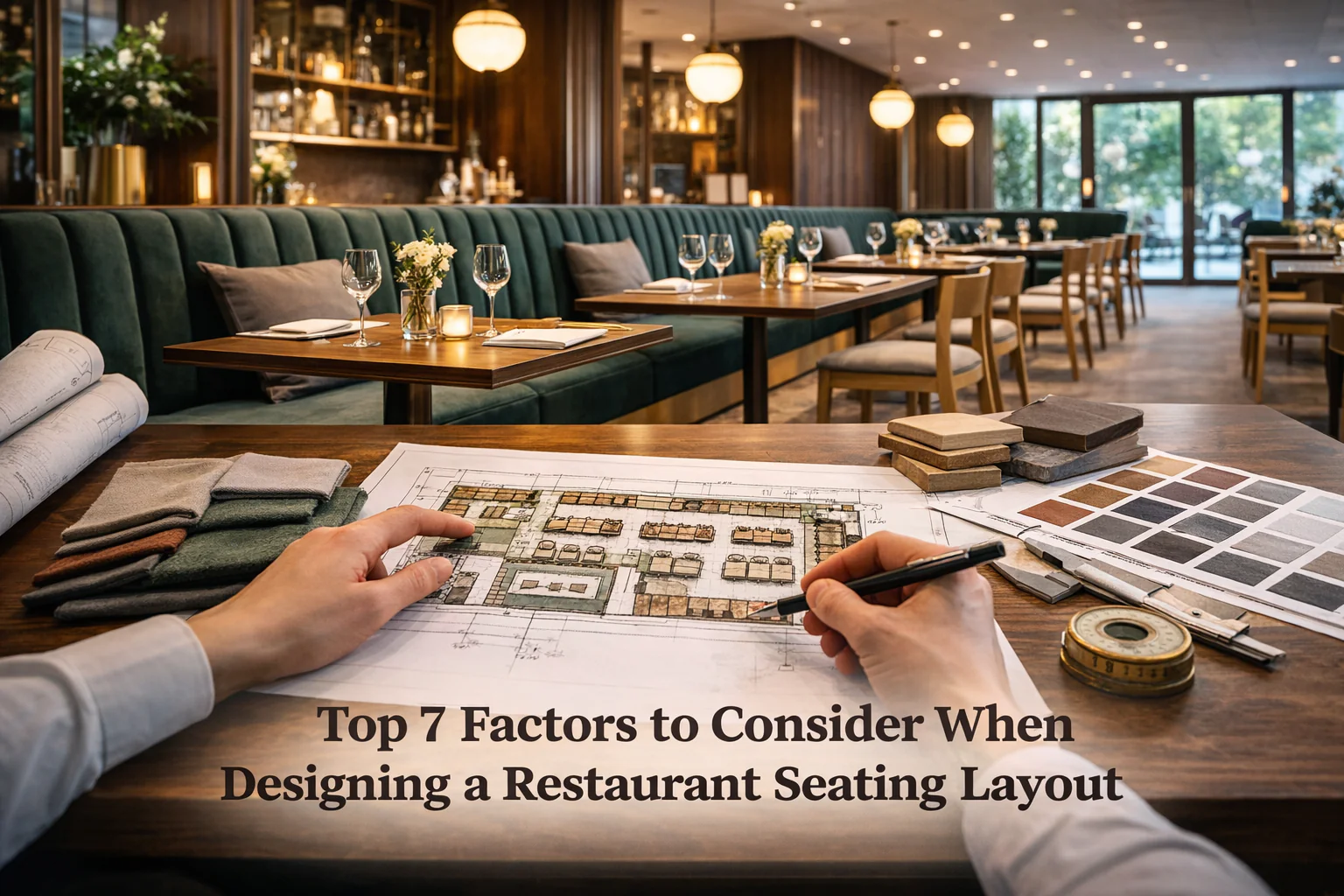
Designing the perfect restaurant layout is not just about aesthetics — it’s about creating a space that is efficient, comfortable, and profitable.
A well-planned seating layout can maximise capacity, improve customer experience, and enhance overall workflow. Whether you’re opening a new restaurant or redesigning an existing one, understanding the key factors is essential.
1. Space Optimisation
Maximising your available space is crucial, especially for those looking for hospitality furniture UK environments where floor space can be limited.
Consider:
- Using banquette seating along walls
- Optimising table spacing
- Avoiding unused or awkward areas
Efficient layouts allow you to serve more customers without compromising comfort.
2. Customer Comfort
Comfort directly impacts how long customers stay and how they perceive your brand.
Focus on:
- Proper seating height and spacing
- Comfortable cushioning
- Adequate legroom
A comfortable guest is more likely to return.
3. Flow & Accessibility
A good layout ensures smooth movement for both customers and staff.
Key considerations:
- Clear pathways between tables
- Easy access to entrances, exits, and restrooms
- Efficient service routes for staff
This improves service speed and overall experience.
4. Seating Mix Strategy
Using a mix of seating types creates flexibility and visual interest.
Best approach:
- Banquette seating for walls
- Chairs for central tables
- Lounge seating for waiting or relaxed areas
This combination balances efficiency and versatility.
5. Brand & Interior Design Alignment
Your seating layout should reflect your brand identity.
For example:
- Fine dining → spacious layout, luxury seating
- Casual dining → compact, efficient seating
- Café → relaxed and informal
Consistency in design strengthens your brand image.
6. Durability & Maintenance
Restaurant furniture must withstand constant use.
Choose:
- Commercial-grade materials
- Easy-to-clean surfaces
- Stain-resistant fabrics
This reduces maintenance costs and ensures longevity.
7. Lighting & Ambience
Lighting plays a major role in how your seating area feels.
Combine:
- Ambient lighting for mood
- Task lighting for tables
- Accent lighting for design highlights
Good lighting enhances both comfort and aesthetics.
Common Mistakes to Avoid
❌ Overcrowding tables
❌ Ignoring customer comfort
❌ Poor traffic flow
❌ Choosing style over functionality
Avoiding these mistakes can significantly improve your layout performance.
Why Work with Experts?
Designing a restaurant layout requires experience and planning.
As trusted contract furniture specialists in the UK, we help businesses create layouts that maximise space, improve flow, and deliver a premium customer experience.
Conclusion
A well-designed seating layout is a key factor in the success of any restaurant.
By focusing on space, comfort, and functionality, you can create an environment that not only looks great but also performs efficiently.
Designing the perfect restaurant layout is not just about aesthetics — it’s about creating a space that is efficient, comfortable, and profitable.